If you’ve been researching what is the correct way to store whiskey? you’re not alone. Proper storage can keep your favorite dram tasting smooth and flavorful for far longer than you might think. From choosing the right environment to deciding when and how to use a decanter, let’s dive into a few practical tips that can help you safeguard every drop.
Choose a cool, dark place
Sunlight is the enemy of good whiskey. Intense light can break down the liquid’s molecular structure, causing it to lose color and flavor over time. Aim for a spot in your home that’s consistently dark like a cabinet or closet. This is especially important if you’ve invested in special or collectible bottles.
More light-blocking ideas
- Avoid windowsills, kitchen counters near bright windows, or sunlit shelves.
- If you display bottles, keep them behind tinted or frosted glass to shield them from direct rays.
Keep your bottles upright
Unlike wine, whiskey doesn’t need to lie on its side. In fact, storing whiskey horizontally can damage the cork. High alcohol content can break down the cork more quickly, letting small bits of cork fall into the bottle or potentially letting oxygen slip in.
Quick upright storage tips
- Use sturdy shelves or a dedicated whiskey rack so bottles remain upright.
- Inspect corks occasionally for signs of wear or crumbling.
Watch out for temperature changes
Consistent temperature between 55°F and 60°F (around 13°C–16°C) is often cited as ideal for whiskey storage. You don’t have to keep it in a wine cooler, but you do want to avoid temperature extremes or fluctuations. Heat can make the whiskey evaporate faster. Colder-than-usual conditions might create cloudiness, but it typically doesn’t affect flavor.
Simple ways to regulate heat
- Place whiskey away from heating vents or stoves.
- Keep bottles out of attics or garages prone to significant temperature swings.
Limit oxidation and evaporation
Once you crack open a bottle, oxygen starts to interact with the whiskey, leading to slow but steady flavor changes. While oxidation can sometimes produce interesting notes in the short term, too much will eventually dampen the spirit’s taste.
Tips to reduce oxidation
- Transfer whiskey to smaller bottles or a whiskey decanter once your main bottle dips below a third full. Reducing the empty space helps slow down oxidation.
- Ensure each container is tightly sealed to limit evaporation and preserve flavor.
Consider a whiskey decanter
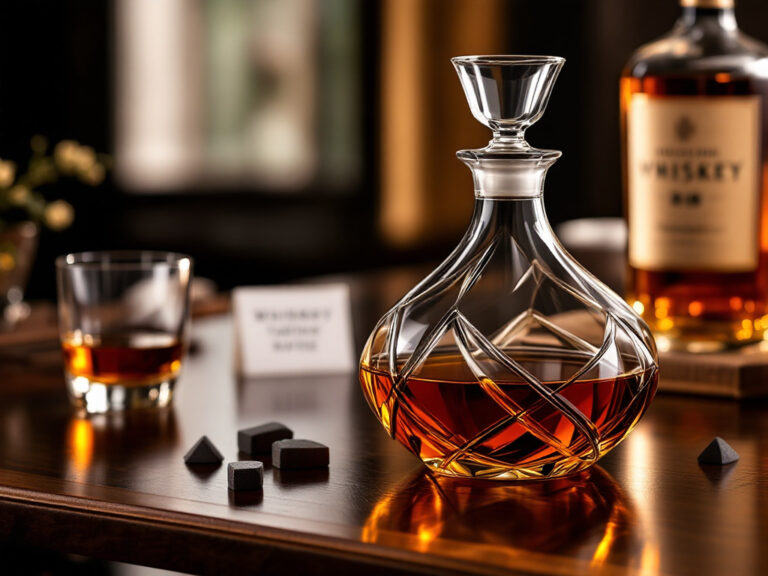
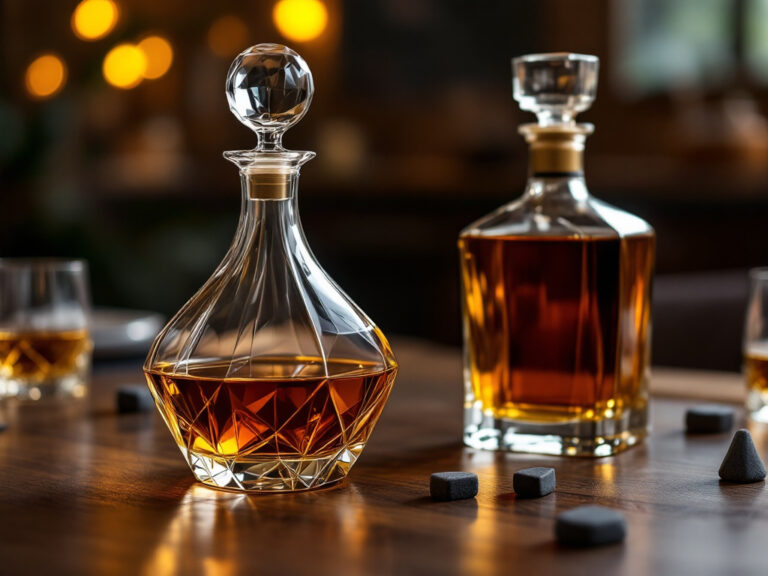
A decanter can be both practical and decorative. It allows you to serve whiskey in style while minimizing air exposure if it’s sized right. Make sure the decanter has an airtight seal to protect the spirit. Large or loosely sealed decanters can accelerate oxidation, so choose carefully.
Decanter do’s
- Opt for one that matches the volume you have left, ideally leaving little to no extra space.
- Select lead-free crystal or glass to avoid potential contamination.
Key takeaways
- Protect your whiskey from direct sunlight by storing it in a dark spot.
- Keep bottles upright so the cork won’t degrade.
- Maintain a stable temperature of around 55°F to 60°F to prevent flavor loss.
- Use decanters or smaller bottles to reduce oxidation in opened bottles.
- Check your corks periodically (and let the whiskey touch them briefly every couple of months) to maintain a secure seal.
By following these simple steps, you’ll extend the life of your whiskey, preserve its flavor, and enjoy every sip in top condition. Whether you’re building a small collection or simply savoring a special bottle, thoughtful care and storage go a long way toward maximizing every pour. Cheers to keeping your whiskey fresh and ready for whenever you decide to indulge!